gcsescience.com 76 gcsescience.com
Vegetable Oils - Emulsions.
What is an Emulsion?
Vegetable oils do not
dissolve in water.
Oil will float on top
of water because it is less dense
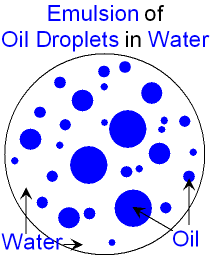
but tiny little drops (called droplets)
of oil can be
dispersed in water
to form a mixture
called an emulsion.
An emulsion is thicker
(has a higher viscosity)
than
either
oil or water.
Examples of emulsions in food
are
ice cream,
milk
and salad dressings.
Emulsions are also used to make cosmetics
and paints.
How is an Emulsion made?
An emulsion can be
made just by shaking oil
and
water together.
Shaking the two together vigorously
breaks up
the oil into
droplets and the droplets
become scattered (dispersed)
throughout the water.
When you stop shaking,
the oil and water mixture will
separate and in a
little time
the oil will float
back up to the
surface of the water. You can make the oil droplets
stay in the water for a longer
time
by using an emulsifier.
This is called making the emulsion more stable.
gcsescience.com The Periodic Table Index Oil Products Quiz gcsescience.com
Home GCSE Chemistry GCSE Physics
Copyright © 2015 gcsescience.com. All Rights Reserved.