gcsescience.com 1 gcsescience.com
What is Electricity?
Electricity is a flow
of charged particles.
Charged
particles can be
electrons or ions.
If you are not sure what electrons or
ions are,
see GCSE Chemistry at electrons or
ions.
In chemistry during electrolysis, ions
that are
free to move will
conduct electricity.
In physics, electricity
is a flow of
electrons.
What is a Cell or a Battery?
A cell or
a battery is a power
supply
that uses chemical energy to
make electricity.
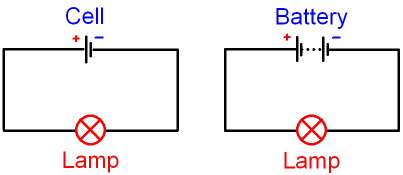
In the circuit below, electricity will flow
from the
cell or battery,
through the lamp
and back to the cell. This is called direct
current.
What is the Difference between a Cell and a Battery?
In every-day life, we use the word "battery".
In physics, one "battery" on its own
is called a cell.
Two or more
cells joined together
are called a battery.
The word "battery" is used to mean "collection".
A collection of cells is called a battery of
cells.
The cells of a battery
are joined together in series.
The positive side of one
cell
touches the negative side of the next cell.
 Links
Electricity
Revision Questions
Links
Electricity
Revision Questions

gcsescience.com Physics Quiz Index Electricity Quiz gcsescience.com
Home GCSE Chemistry GCSE Physics
Copyright © 2015 gcsescience.com. All Rights Reserved.