gcsescience.com 59 gcsescience.com
What are the Properties of Polymers?
The properties of
a polymer (or any other material) include
strength,
stiffness,
hardness,
density and melting
point.
The properties of a polymer can be changed in a number of ways.
1. Chain length. 2. Plasticizers.
3. Crystallinity. 4. Cross linking.
Chain Length.
A polymer molecule is a long
chain of
(mainly
carbon)
atoms.
The effect on the properties
of increasing the length
of the polymer chain is similar to the effect
of increasing
crystallinity. The material becomes
stronger,
stiffer
and the melting
point gets higher.
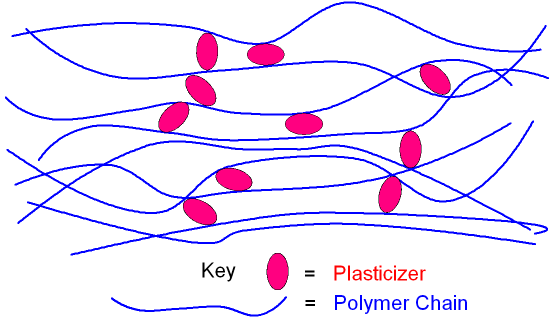
What is a Plasticizer?
A plasticizer is a chemical
which is added to a polymer
to increase
its flexibility. The plasticizer gets between
the polymer
chains and keeps them further apart
which reduces the forces
of attraction between them
and makes the
material
more flexible. The polymer
will probably have a reduced
strength and stiffness
because of the plasticizer but the
material will be more
useful where flexibility
is required.
Some polymers are
available with or without
a plasticizer.
An example is poly(chloroethene) (PVC).
Without a plasticizer
it is often called uPVC
where the u
means unplasticized.
uPVC
is rigid
and is used to make drain
pipes and window frames.
With a plasticizer
PVC is flexible and is
used to make
all of the other examples on the list of uses
of PVC.
There is a danger that some
plasticizers can get out
of PVC
(called leaching out) and cause harm
to the environment.
 Links Polymers Revision Questions
gcsescience.com The Periodic Table Index Polymers Quiz gcsescience.com
Home GCSE Chemistry GCSE Physics
Copyright © 2015 gcsescience.com. All Rights Reserved.